Business Details
9 Years
experience
Personalized Fitness Training for Autism & Special Needs
Founded in 2017 by David Crowley, Adaptive Exercise specializes in personalized fitness training for individuals with autism and special needs. Our approach combines Applied Behavior Analysis (ABA) strategies with functional movement training to create safe, engaging, and goal-oriented programs. With over a decade of experience in speech-language pathology and ABA counseling, David developed our methodology to address the unique challenges faced by individuals on the spectrum. Our services include in-home personal training, group classes, and virtual sessions designed to improve physical health, independence, and social skills. We utilize data-driven progress tracking and collaborate with families to ensure programs align with individual needs.Our team holds certifications from the American Council on Exercise (ACE) and Autism Fitness, maintaining the highest standards in adaptive fitness training. We prioritize creating comfortable environments for learning, whether in clients' homes or through virtual platforms. Our functional movement approach prepares individuals for daily life activities while making exercise enjoyable and accessible. Through consistent, compassionate support, we empower clients to achieve measurable improvements in fitness and overall well-being. Our Worcester County-based service has helped numerous families access specialized fitness solutions that traditional gyms cannot provide.
Services
Personalized Exercise Plans
Group Exercise Classes
Virtual Training Sessions
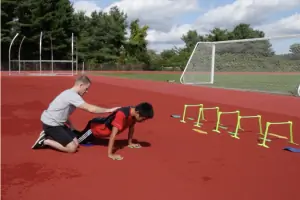
Functional Movement Training
ABA-Based Fitness Programs
Details
- Year established: 2017
Highlights and features
- Founder David Crowley combines 7+ years of ABA counseling with personal training expertise
- Specialized in-home training eliminates overwhelming gym environments
- Uses ABA strategies proven effective for autism spectrum individuals
- Data-driven progress tracking with measurable, time-bound goals
- Offers virtual training options for remote accessibility
Associations and certifications
- American Council on Exercise (ACE)
- National Commission for Certifying Agencies (NCCA)
- Autism Fitness LVL 1 Certified
What people say
Incredible trainer
Amazing influence
Wonderful experience
Positive behavior support
Knowledgeable instructor
Services
Personalized Exercise Plans
Our Personalized Exercise Plans (PEPs) mirror special education IEP processes through data-driven goal setting and progress tracking. Each plan begins with a 2-4 session assessment period to establish baseline fitness levels and build rapport. Certified trainers develop measurable objectives for exercise independence, using ABA strategies to modify programming as clients progress. Sessions focus on functional movements that improve daily living activities like carrying objects and climbing stairs.
Group Exercise Classes
Traveling group classes use visual supports and modified instruction to accommodate diverse abilities. Structured 45-minute sessions include warm-ups, group exercises, obstacle courses, and cool-down stretches. Classes promote social interaction while teaching functional fitness through structured phases. Currently offered at Autism Resource Central, with options to bring programs to schools and therapy centers.
Virtual Training Sessions
Remote training uses video platforms with modified language and kinesthetic cues. Trainers demonstrate exercises first, then guide clients through movements using simplified instructions. Requires minimal space and no equipment. Best suited for clients who can follow verbal/visual directions and remain engaged for 30-minute sessions. Includes form feedback through webcam observation.
Functional Movement Training
Specialized training focuses on movements that improve daily activities. Exercises target strength and mobility needed for tasks like reaching cabinets, carrying backpacks, and climbing stairs. Programs develop core stability and motor planning while reducing stereotypic behaviors. Equipment and movements are carefully selected for safety and practical application.
ABA-Based Fitness Programs
Applied Behavior Analysis strategies shape exercise behaviors through positive reinforcement and structured support. Trainers use prompting techniques and data tracking to modify approaches based on client responses. Programs address low muscle tone and motor delays common in autism while promoting health improvements documented in clinical research.
People
David Crowley
Founder & Lead Trainer
David Crowley founded Adaptive Exercise in 2017 after seven years as a speech-language pathology assistant and ABA counselor. Certified by ACE and Autism Fitness, he combines fitness expertise with special needs experience to create accessible exercise programs. His work focuses on addressing health disparities in autism through functional movement training.
Questions
What makes Adaptive Exercise different from traditional gyms?
We specialize in in-home training for autism and special needs individuals, eliminating overwhelming gym environments. Our ABA-based approach uses personalized instruction and modified equipment.
Do you offer virtual training options?
Yes, we provide virtual sessions using video platforms with modified language and kinesthetic cues. Requires minimal space and no equipment for remote accessibility.
How do you create personalized exercise plans?
Our PEP process mirrors IEPs through initial assessments, data tracking, and measurable goals. Trainers evaluate fitness levels and develop programs focused on functional movement improvements.
What areas do you serve in Massachusetts?
We serve Worcester County including Worcester, Auburn, Shrewsbury, Hudson, Northborough, and Marlborough. Contact us to confirm availability in your specific location.
What certifications do your trainers hold?
Our trainers are ACE-certified with additional Autism Fitness LVL 1 certification. We follow NCCA-accredited standards and maintain First Aid/CPR certification.
How does exercise benefit individuals with autism?
Research shows exercise reduces stereotypy, improves motor function, and enhances social skills. Our programs address health disparities while promoting independence through functional movement training.